
JAMES WEBB
The premier observatory of the next decade, solving mysteries in our solar system and looking beyond to distant worlds around other stars.
Latest Discoveries
NASA Official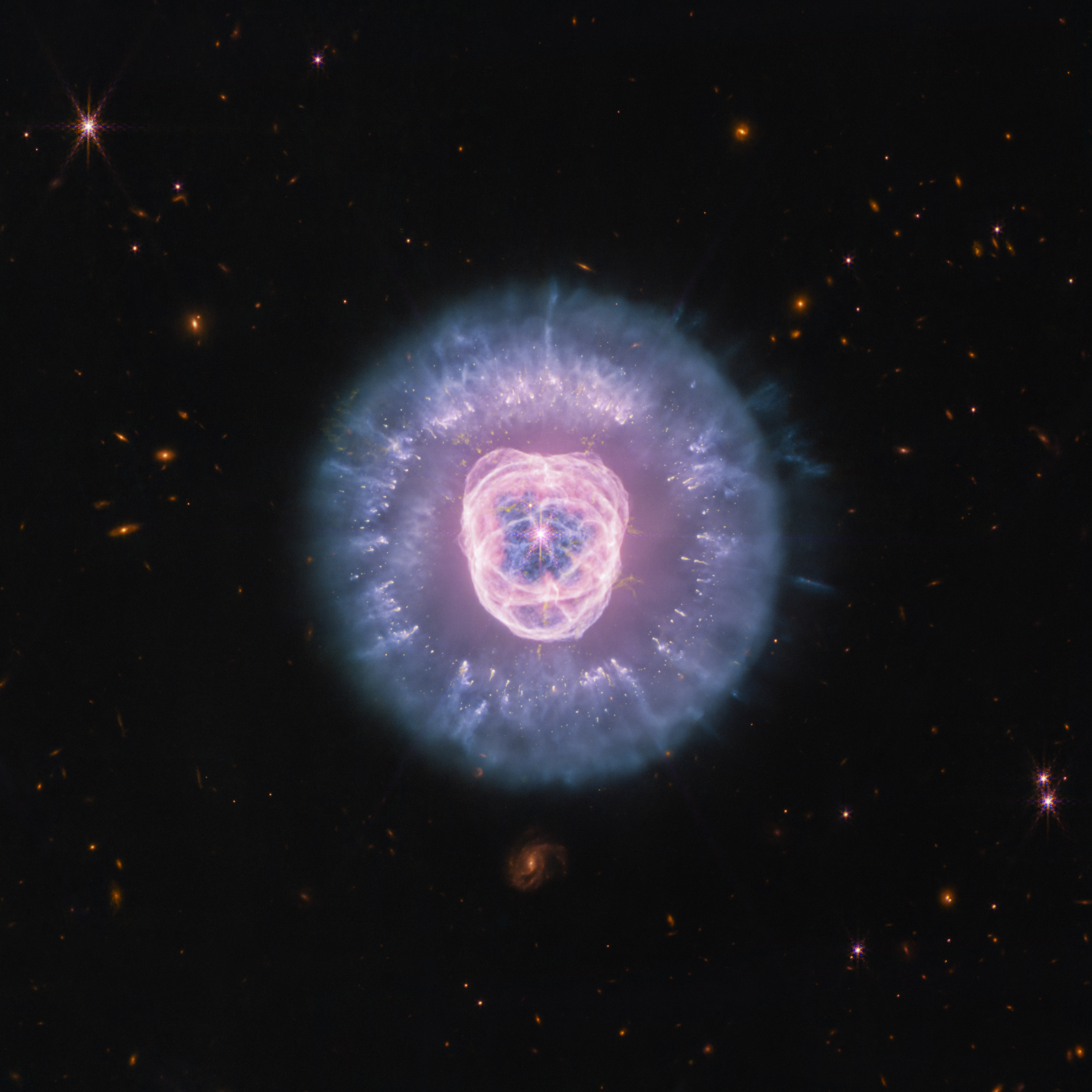
Lion Nebula Roars in Webb’s Sights
Observing across the starry “plains” of space, NASA’s James Webb Space Telescope has taken new images of NGC 2392, nicknamed the Lion Nebula. The nebula’s “mane” is clear and detailed in this image released on Aug. 10, 2026, due to Webb’s high-resolution imaging. See more images of the Lion Nebula from Webb. Image: NASA, ESA, […]

Dust and water spotted close to giant black hole
Using the NASA/ESA/CSA James Webb Space Telescope, an international team of astronomers have discovered that dust and water can form and survive surprisingly close to the supermassive black hole at the centre of our Milky Way galaxy. The observations reveal that the evolved star IRS 3 continues to enrich its surroundings with newly formed material despite the intense radiation environment around Sagittarius A*.
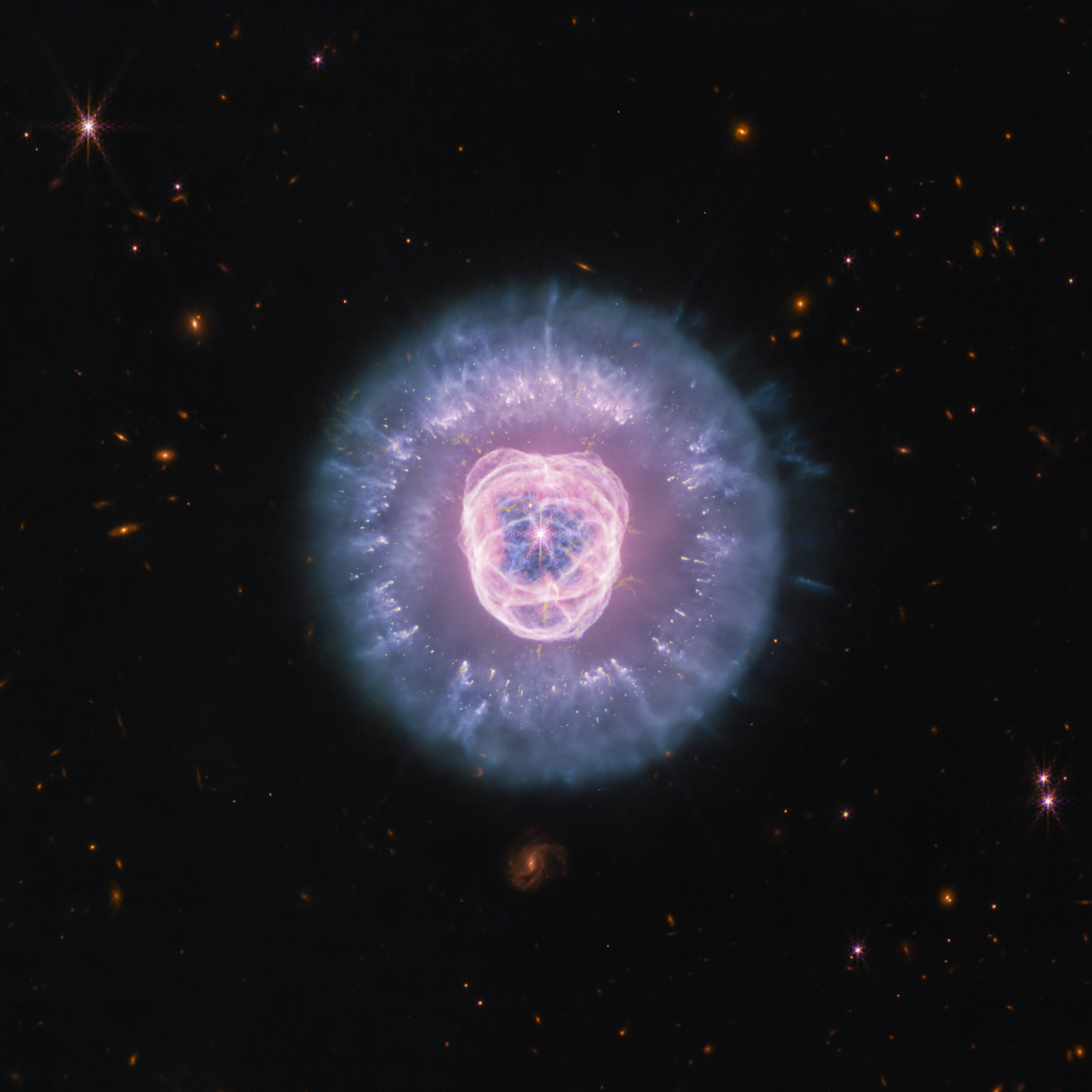
Lion Nebula Roars to Life With NASA’s Webb
Observing across the starry “plains” of space, NASA’s James Webb Space Telescope has taken new images of NGC 2392, nicknamed the Lion Nebula. NASA’s Hubble Space Telescope previously viewed this planetary nebula in 2000, imaging the lion face-shaped target in visible light and revealing features such as the “mane” of hazy, comet-shaped objects. Now Webb […]

Lion Nebula roars to life for Webb
Observing across the starry “plains” of space, the NASA/ESA/CSA James Webb Space Telescope has taken images of NGC 2392, nicknamed the Lion Nebula.

Webb opens a Treasure Chest filled with stars
This NASA/ESA/CSA James Webb Space Telescope Picture of the Month takes us to a fantastical realm within our home galaxy, where piercing starlight and billowing winds sculpt dust clouds into inventive shapes. This scene is from the Carina Nebula, which lies just 7500 light-years away in the constellation Carina (the Keel).
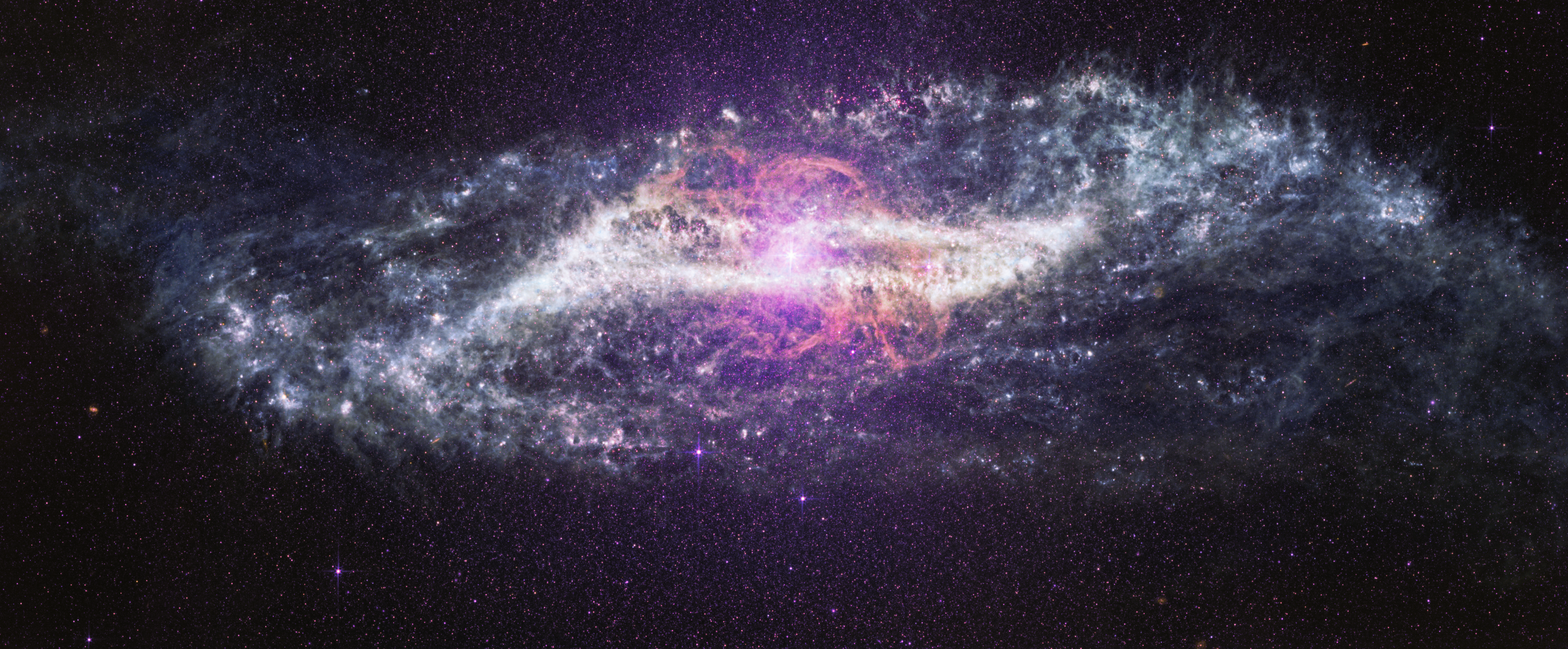
Starburst Galaxy Centaurus A
In this July 6, 2026, image, NASA’s James Webb Space Telescope’s Mid-Infrared Instrument (MIRI) reveals the nearby galaxy Centaurus A, exposing the dusty structures and hidden activity that shape this unusual system. Centaurus A is 11 million light-years away from Earth, relatively close in cosmic terms. Yet, unlike most nearby galaxies, it is very active, […]
History & Milestones
Project Inception
1996
Initially called the Next Generation Space Telescope (NGST), the project was formally started to succeed the Hubble Space Telescope.
Renaming to JWST
2002
The telescope was renamed after James E. Webb, NASA's second administrator who played a key role in the Apollo program.
Historic Launch
December 25, 2021
Launched on an Ariane 5 rocket from French Guiana, beginning its million-mile journey to the second Lagrange point (L2).
First Images Revealed
July 12, 2022
NASA released the first full-color images and spectroscopic data, officially marking the beginning of Webb's scientific operations.
The L2 Orbit
Unlike the Hubble Space Telescope, which orbits Earth, Webb orbits the Sun 1.5 million kilometers (1 million miles) away from Earth at what is called the second Lagrange point or L2.
What is special about this orbit? It lets the telescope stay in line with the Earth as it moves around the Sun. This allows the satellite's large sunshield to protect the telescope from the light and heat of the Sun and Earth (and Moon).

Diagram of the L2 point relative to Earth and the Sun.
Webb's Science Instruments
NIRCam
Webb's primary imager covering the infrared wavelength range 0.6 to 5 microns. It detects light from the earliest stars and galaxies.
NIRSpec
Disperses light into a spectrum to analyze the physical properties and chemical composition of distant objects.
MIRI
Has both a camera and a spectrograph that sees light in the mid-infrared region. It sees cold dust, old galaxies, and planets.
FGS/NIRISS
Allows Webb to point precisely so that it can obtain high-quality images. It is crucial for stabilizing the line of sight.
Unveiling the Universe
A curated gallery of the most breathtaking images captured by Webb's Near-Infrared Camera (NIRCam) and Mid-Infrared Instrument (MIRI).
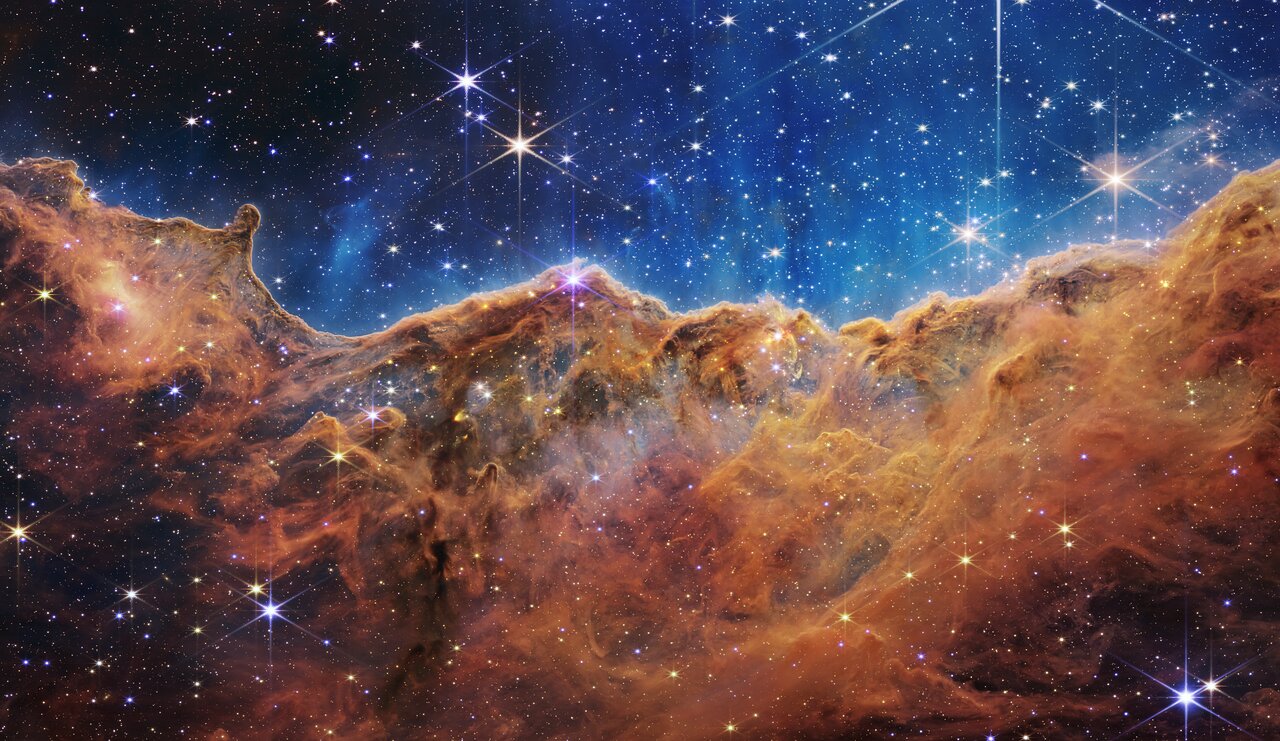
Carina Nebula
Cosmic Cliffs revealing emerging stellar nurseries and individual stars previously hidden in dust.

Pillars of Creation
A highly detailed landscape of star birth, captured in near-infrared light.
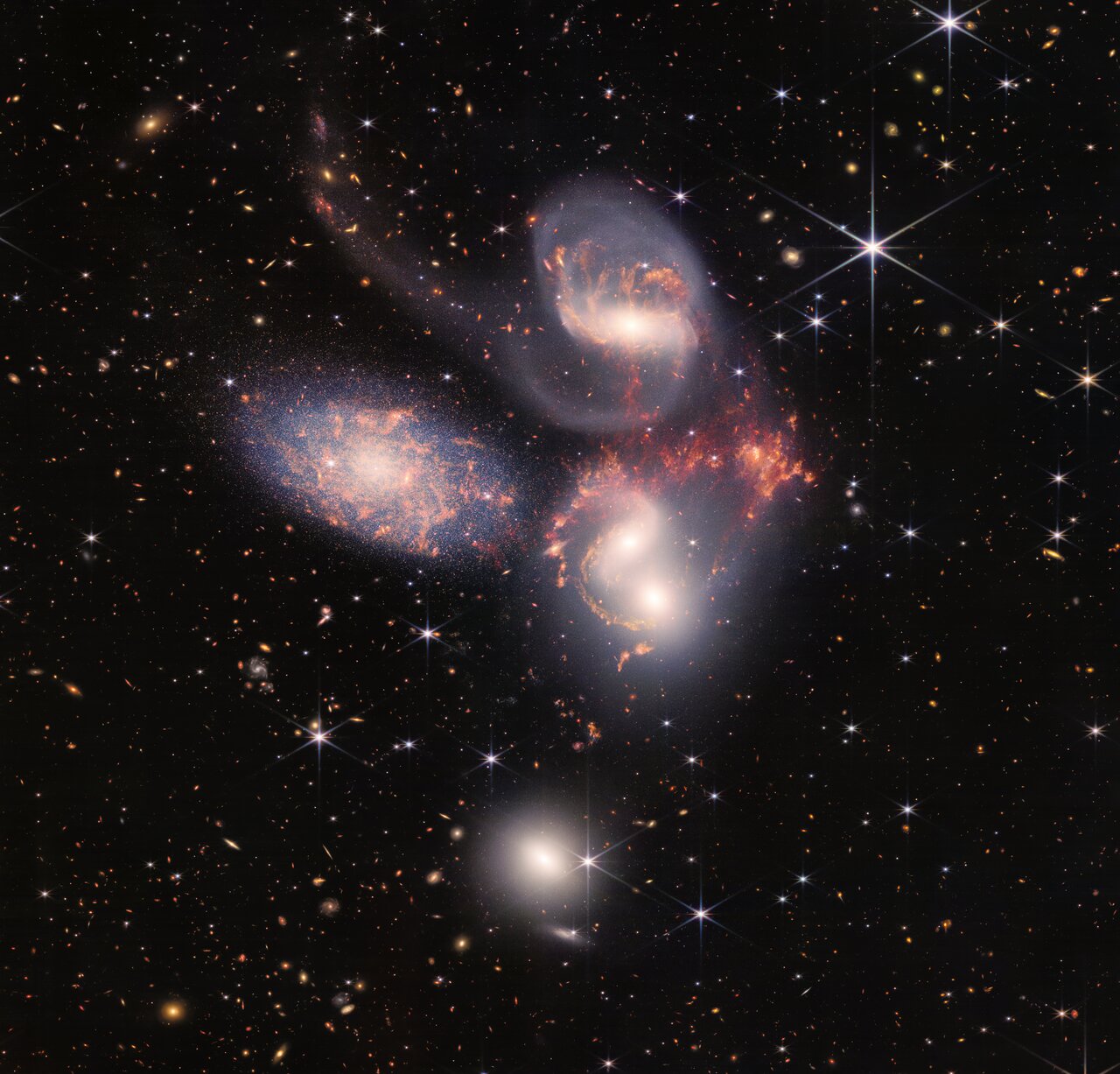
Stephan's Quintet
A visual grouping of five galaxies, revealing galactic interactions in unprecedented detail.
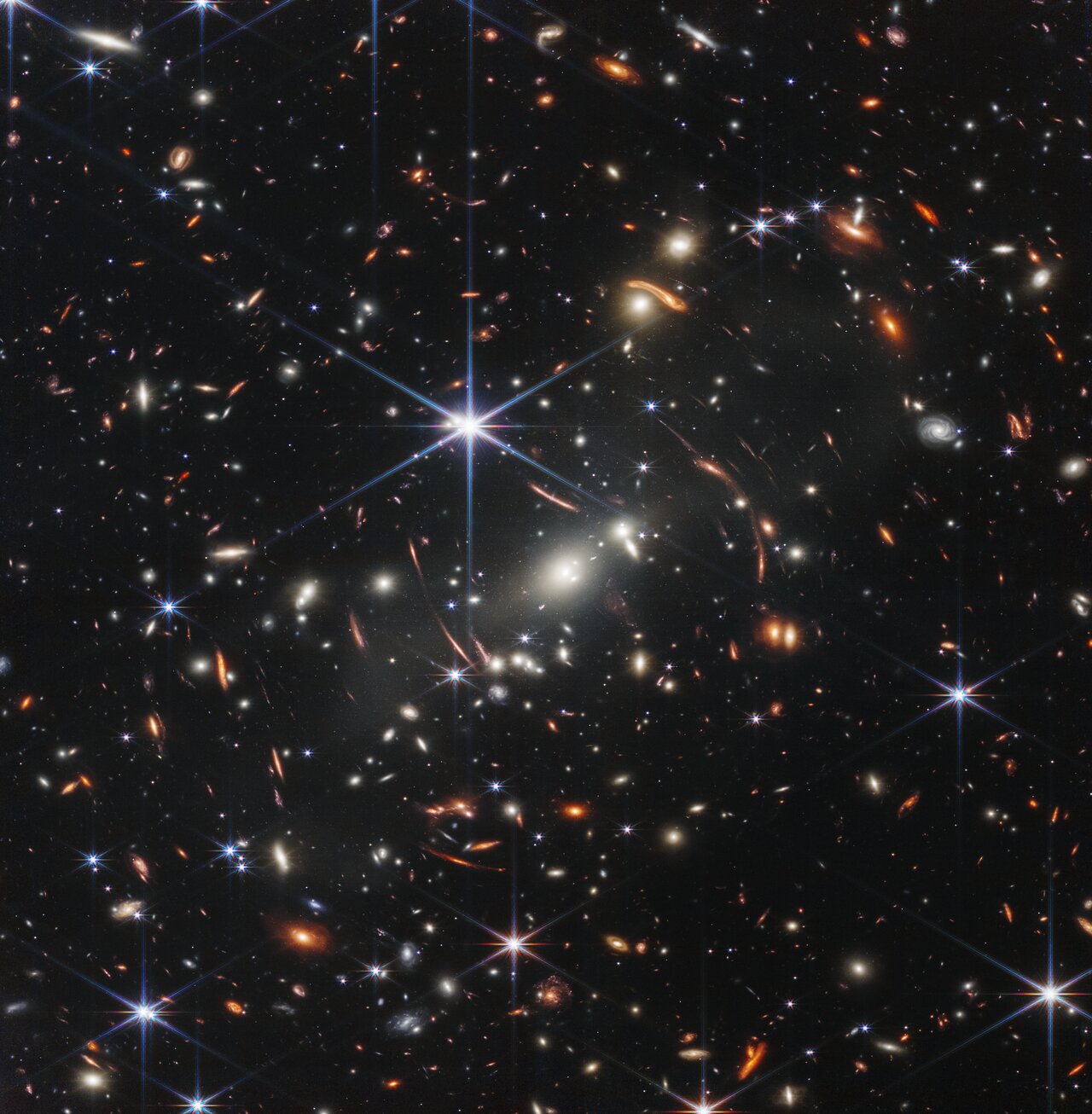
Webb's First Deep Field
SMACS 0723: The deepest and sharpest infrared image of the distant universe to date.

Jupiter in Infrared
Showcasing auroras, hazes, and two of its smaller moons against the cosmic background.

Tarantula Nebula
Thousands of never-before-seen young stars spotted in this stellar nursery.